Percussion
History
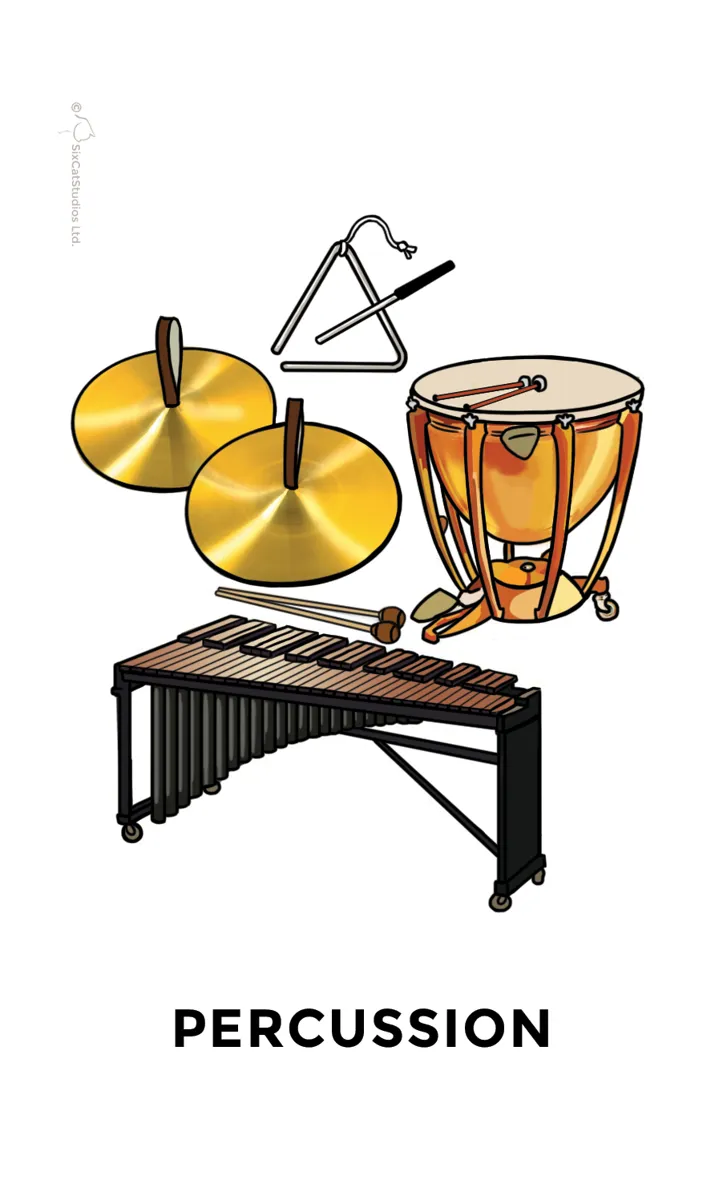
A percussion instrument is one that is struck with the hand, a beater or a stick, or shaken to produce sound. Percussion instruments are generally divided into two groups: tuned and untuned percussion. Tuned percussion refers to instruments that contain a musical scale when struck, and untuned percussion has no definite note pitch and is generally used to create rhythmic patterns or keep a steady beat.
Facts & Features
- Percussion is the oldest of all the musical instrument families. These instruments emerged in various cultures as early as 6000 B.C.
- Drums are the oldest of all percussion instruments and have been used for war, ceremonies, dancing and musical entertainment.
- Tuned percussion instruments include the xylophone, marimba, glockenspiel, timpani and tubular bells. The snare drum, bass drum, tambourine and cymbals are examples of untuned percussion.
- Orchestral percussionists play several percussion instruments throughout the course of a piece of music.
- The piano is considered a percussion instrument, because small mallets hit its strings, which are set in motion by the striking of fingers on the keys. It is called a chordophone.
Famous Players
Vida Chenoweth - (1929-)
Keiko Abe - (1937-)
Emmanuel Séjourné - (1961-)
Peter Sadlo - (1962-2016)
Evelyn Glennie - (1965-)
Music To Listen To
Bartók - Sonata for 2 pianos and percussion – timpani
Jennifer Higdon - Percussion Concerto
Saint Seans - Fossils from The Carnival of the Animals - xylophone
Steve Reich - Drumming
Panufnik - Concertino for Timpani, Percussion and Strings
Find Out
- Who composed the Paper Percussion Concerto?
- Which percussion instrument has to be tuned before it is played?