Oboe
History
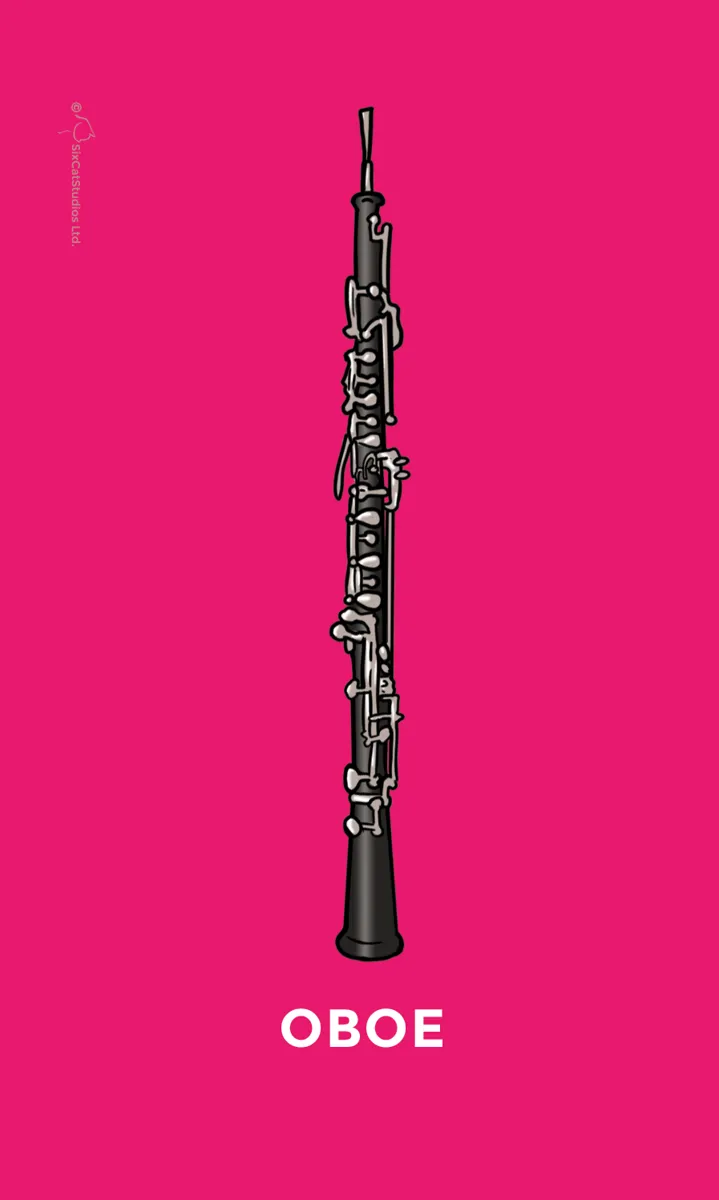
Double reed instruments were found in Mesopotamia from about 3000 BC and later in the ancient Greek and Roman civilizations. The oboe is a descendant of the 13th century shawm – a name used to describe an instrument played with a single or double reed. During the 17th century, the treble shawm evolved into the hoboy or hautboy. The Cor Anglais, or English horn, is a longer and lower pitched relation of the oboe. It has a beautiful and haunting sound.
Facts & Features
- Most professional oboe players make their own reeds. Reeds must be soaked in water before they are played, so they can vibrate well.
- The name ‘oboe’ comes from the French ‘hautbois, which means ‘high’ or ‘loud wood’.
- All the players of an orchestra will tune their instruments to the principal oboist’s note ‘A’.
- Oboes are most often made of grenadilla, or African Blackwood, although some are made from rosewood or violetwood.
- Playing the oboe requires as much or more air as playing the tuba!
Famous Players
Jean Hotteterre - (1610-1691)
Georg Philip Telemann - (1681-1767)
Josef Fiala - (1748-1816)
Antonio Pasculli - (1842-1924)
Evelyn Barbirolli - (1911-2008)
Music To Listen To
Corelli - Concerto for Oboe
Mozart - Oboe Quartet
Ravel - Bolero
Dvorak - New World Symphony – Largo (Cor Anglais solo)
Prokofiev - Peter and the Wolf
Find Out
- When were keys added to the oboe?
- Name two concertos written for the Cor Anglais.