French Horn
History
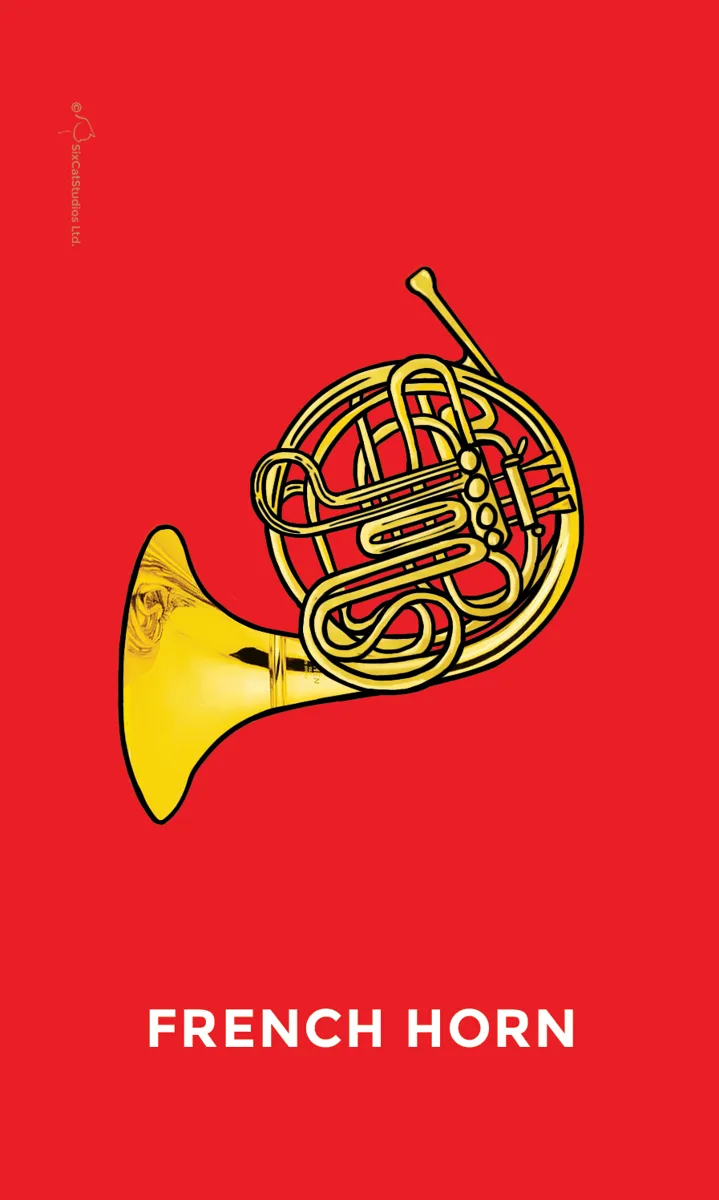
Horn-like instruments are a result of ancient signaling devices, which in their earliest forms were made from hollowed animal horns for hunting or military purposes. The single-coiled horn used for hunting in France, known as cor de chasse, was a precursor to the modern horn which contains valves, leading the instrument to be labeled the French horn.
Facts & Features
- Despite being named the French horn, many of the refinements made to the instrument, like the crucial development of valves, is due to the work of German inventors.
- The tubing of the modern French horn spans 12-13 feet long (3.7-4m), not including the coils of the instrument.
- The French horn is the only brass instrument that is played left-handed.
- The type of French horn most commonly used is a double horn, which allows the player to shift between F and B-flat keys. This gives the instrument the widest range in the brass family.
- Classical orchestras used to feature only two horns, but it is now common for at least four horn players to be present, with the first and third horns playing at a higher register than the second and fourth.
Famous Players
Heinrich Hubler - (1822-1893)
Dennis Brain - (1921-1957)
Peter Damm - (1937-)
Sarah Willis - (1969 -)
Radek Baborák - (1976-)
Music To Listen To
Beethoven - 3rd Symphony
Brahms - Horn Trio in E-flat major, Op. 40
Haydn - Concerto No. 1 in D
Schumann - Adagio and Allegro Op. 70
Turner - Casbah of Tetouan
Find Out
- What is the difference between a single and double horn?
- What is handstopping?